
Key takeaways
- -Paving wants a flat, well-compacted base. Creating one on a sloping block means retaining, fill and drainage - costs that quickly overtake a deck's substructure.
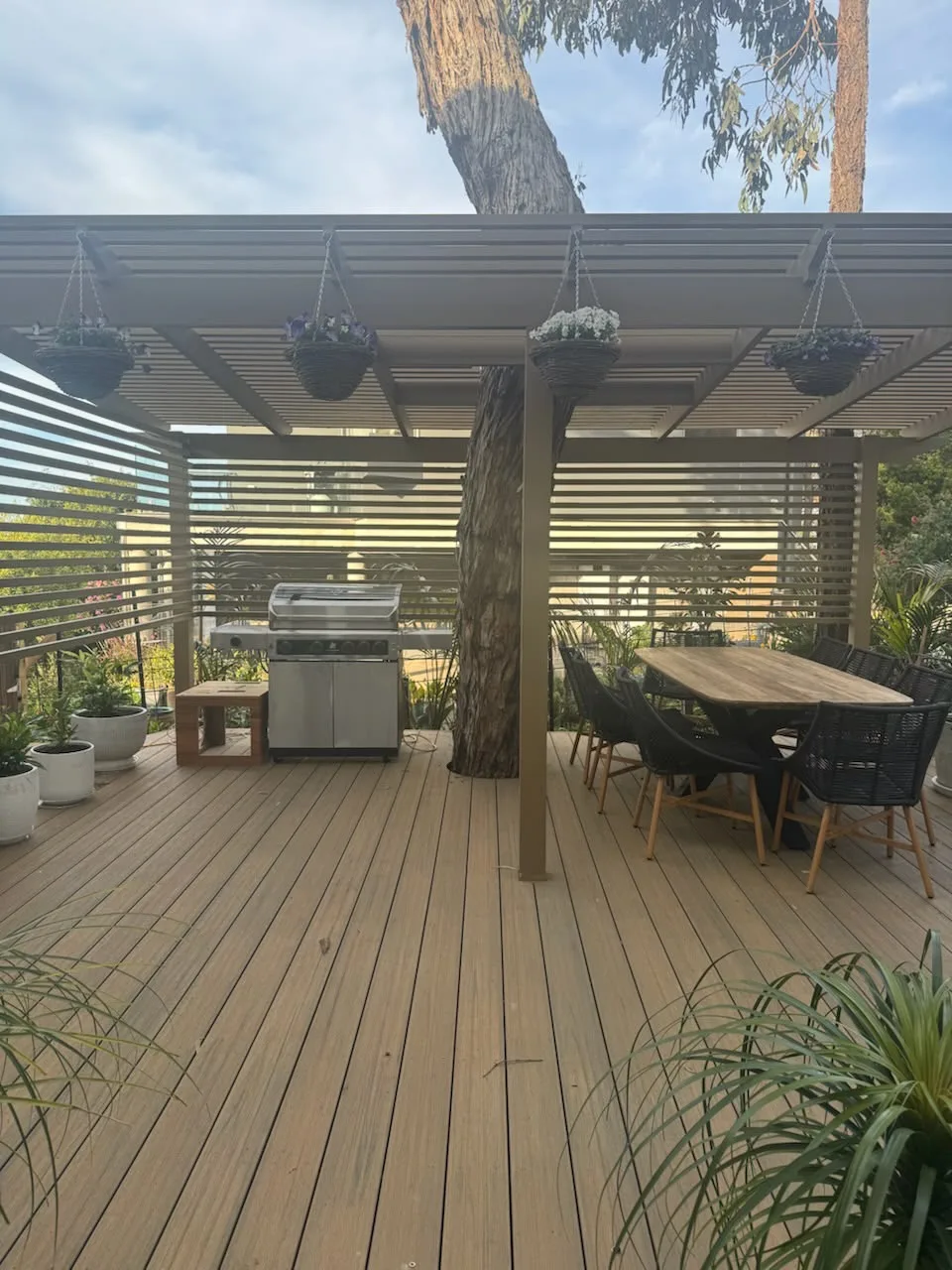
- -Timber is warmer underfoot, quieter and softer in the shade of a canopy. Stone and concrete hold heat and can feel harsh in a fern-heavy garden.
- -A deck needs a wash and re-oil roughly annually, and boards can be replaced individually. Paving needs occasional cleaning and re-sanding of joints, and repairs are more disrupt...
01
Follow the ground
Paving wants a flat, well-compacted base. Creating one on a sloping block means retaining, fill and drainage - costs that quickly overtake a deck's substructure.
A deck bridges the fall on posts. On anything beyond a gentle grade that is both cheaper and far less disruptive to established trees and roots.
02
Comfort and character
Timber is warmer underfoot, quieter and softer in the shade of a canopy. Stone and concrete hold heat and can feel harsh in a fern-heavy garden.
In shaded, damp positions both surfaces need attention: paving grows moss, decking needs air and cleaning.
03
Maintenance honestly compared
A deck needs a wash and re-oil roughly annually, and boards can be replaced individually. Paving needs occasional cleaning and re-sanding of joints, and repairs are more disruptive.
Neither is maintenance-free. The question is which maintenance you would rather do.
04
Combining both
Many of the best outdoor spaces we build use both: paving where the ground is already flat and close to the house, decking where the land drops away. Let the site decide the boundary.
Thinking about your own project?
We build across Belgrave and the Dandenong Ranges. Send through photos of what you have and we will tell you what the site allows.